Rugby Union vs Sevens: Two Different Match Rhythms
Rugby union vs sevens shapes match rhythm through player roles, contact and restarts. Learn what to watch to follow each format with greater clarity.
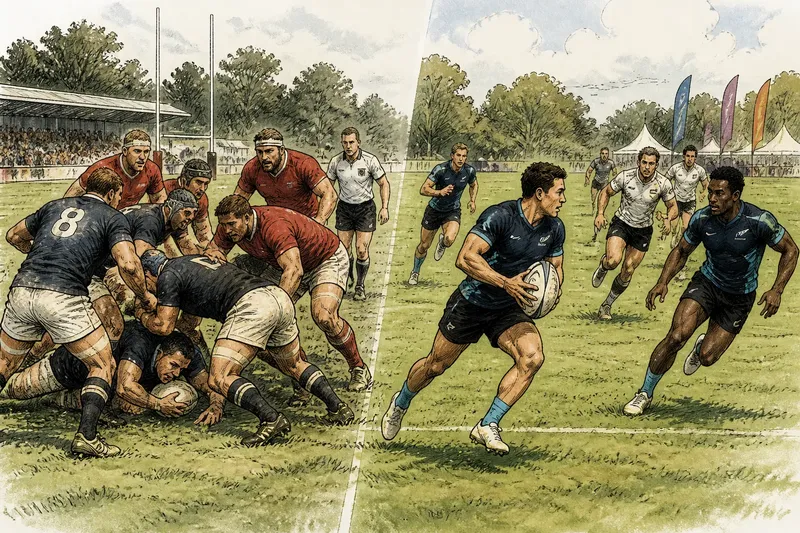
Why does a union match often build through repeated contests, while a sevens attack can cross the field in a few passes? Rugby union vs sevens differs not only in the number of players, but also in how each format organizes contact, support and decisions after a change of possession.
Both formats use familiar rugby contests for the ball and territory. Union has fifteen players per side; sevens has seven. That difference affects what happens around tackles, how teams restart play and what a viewer can track from one passage to the next.
Player roles and space
Sevens uses a full-size rugby field with seven players on each team. With fewer players sharing the field, roles tend to be less specialized during open play: each player may need to defend a broad area, support a runner and then join the next attack. The challenge is not simply to run into open ground; players must stay connected enough to keep possession and cover one another.
Union’s larger lineup allows more defined responsibilities. Forwards commonly take on close contact and set-piece work, while backs often operate farther from the breakdown, though players can move beyond those broad roles. That gives teams more options for reorganizing after contact and choosing where to attack next.
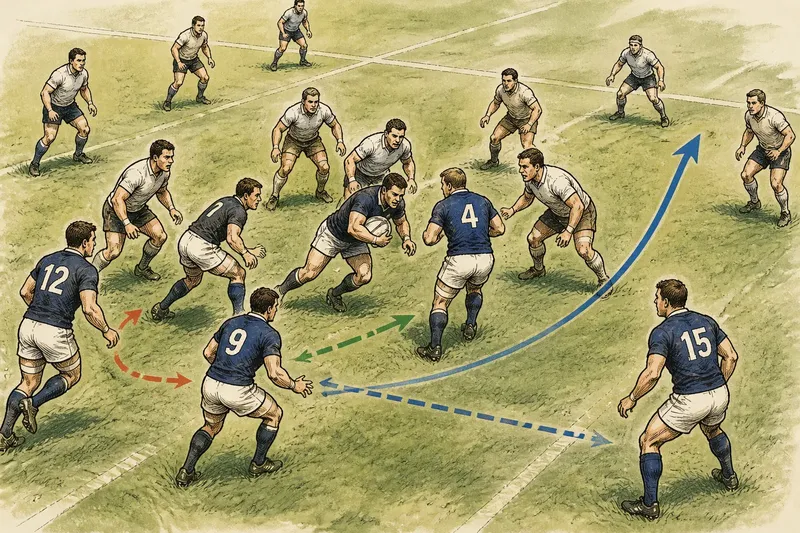
Say a sevens team wins the ball near the halfway line. Its carrier draws a defender, then passes to a teammate who has stayed wide; the teammate can continue forward if the defense has not shifted across. In union, the same pass may still be available, but more defenders are usually positioned across the field, and the attack may first have to retain the ball through a contact or breakdown.
Phases and contact
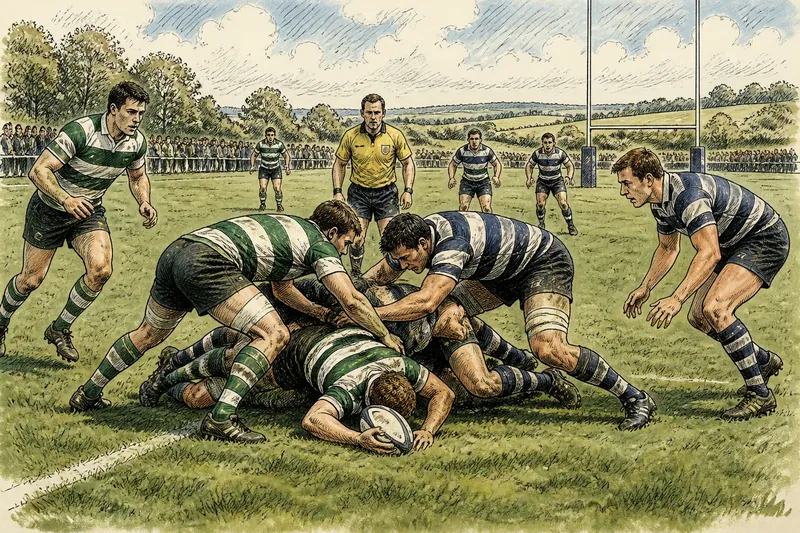
A phase is a sequence of play that continues after a tackle and the ensuing contest for the ball. Union attacks often string phases together: a carrier goes into contact, teammates secure possession, and the team forms again for another attack. The defense also has time and structure to reset around each breakdown.
Sevens can feature tackles and breakdowns too, but fewer players are available to gather around each contest. A side must decide how many teammates to commit to securing the ball and how many to keep ready for the next movement. Those choices help explain why a sevens passage may turn quickly from a tackle into a pass, a turnover or a kick.
Neither format has one fixed pace. Union can produce quick, wide attacks, and sevens can include deliberate phases. To follow the difference, watch what teams do immediately after a tackle: do they build another close contest, or move the ball to a player already positioned to continue the attack?
Restarts and match shape
Restarts matter in both formats because they return the ball to play after scoring and at other specified moments. The laws and procedures are not identical in every detail, so viewers should check the competition’s current rules when a restart decision is central to a match.
Sevens matches are shorter than union matches, and a sevens tournament may schedule several games in a compact event. That makes recovery and squad use visible parts of the format: teams need to manage effort across a match and, in tournament play, across later games. Union has a longer match structure, with substitutions and tactical changes shaped by its own laws and competition rules.
For a viewer, the useful distinction is how the match is organized, not a claim that one format is always more exhausting or intense. Watch how quickly each team returns to its starting shape after a score or a stoppage, and notice which players take responsibility for directing the next passage.
What viewers ask?
Why does sevens have fewer players?
The sevens format places seven players on each side, while union uses fifteen. The smaller lineup changes how teams divide roles and respond to contact, making each player’s positioning more visible.
Does union always have more phases?
No. A union side can score from a quick break, and a sevens side can build a sequence of phases. The difference is a tendency in how teams organize play, not a rule that dictates every attack.
Are the laws the same in both formats?
They share rugby’s core principles, but some laws and match procedures differ. Consult the current rules for the competition you are watching rather than assuming every detail applies to both formats.
What should a new viewer watch first?
Follow the players nearest the ball after a tackle, then look for who organizes the next attack or defensive line. This makes the transition between contact, possession and renewed play easier to understand.
Reading each rhythm
When watching rugby union vs sevens, track three things: who takes responsibility near contact, how teammates arrange themselves afterward, and how the team restarts its next attack. In union, notice the work around each breakdown and how the side forms for another phase. In sevens, follow the players who move into position to support the carrier or direct the next defensive line.
It is not worth trying to assign a tactical label to every pass or tackle while learning the formats. Start with the visible sequence: contact, possession, reorganization, then the next decision. The competition’s laws can explain unusual stoppages, but watching that sequence is usually enough to make the different match rhythms easier to read.
One further distinction is worth keeping in view: a team’s style is not the same as its format. A union side can favor open passing, while a sevens team can choose to protect possession through contact. The format sets the conditions; the players and coaches decide how to respond.